Rental income, withholding refunds, sales, inheritance, a Japanese company's annual filings: whichever applies to you or your client, we quote it as one fixed fee, in writing, and handle it entirely by email. Fees below are reference figures; every engagement starts with a written quote.
The seal used on documents I certify in Japan
Most owners abroad reach Japanese professionals through layers of intermediaries. You don't have to — and if you are an accountant, you keep your client.
Every return is signed by me under my own registration number — not passed to a back office you never meet.
Every engagement starts with a written fixed quote. You pay the quoted amount up front and nothing more. No hourly billing, no surprise invoices.
The entire engagement runs on documents and email. No meetings to schedule from the other side of the world — though a call is available if you want one.
Single services, not packages. Choose what applies; combine as you need. Accounting firms abroad can engage us under their own engagement — see for accounting firms.
Accounting firms · investors deciding what to do
A paid memo, in English, answering a question you frame — how a client's Japanese rental income is taxed, what a sale will trigger, whether a Japanese company makes sense for a buyer from your country. Delivered within an agreed number of days, written so it can be forwarded.
From ¥50,000 ≈ US$350
Individuals abroad with Japanese rental income
The annual return for rental (or other Japan-source) income, with the bookkeeping it needs: depreciation, expenses, the reconciliation of any 20.42% withheld by a corporate tenant, and the refund claim where tax was over-withheld. Includes an English summary for your home-country return.
From ¥80,000 / year ≈ US$550
Companies abroad holding Japanese property
A foreign company earning rent or gains from Japanese property files a Japanese corporate tax return on that Japan-source income even with no office here. We prepare the return, the consumption-tax filing where it applies, the withholding reconciliation and refund, and act as the tax agent the company needs to file.
From ¥150,000 / year ≈ US$1,000
Any non-resident owner or foreign company
Appointment as your tax agent (nozei kanrinin) for national and local taxes, so assessments, property-tax bills and notices reach someone who reads them; forwarding in English; and, where needed, the domestic contact that foreign owners must register with the Legal Affairs Bureau since 2024.
From ¥30,000 / year ≈ US$200
Individuals and foreign companies
The return that settles the 10.21% withheld by the buyer against the actual tax on the gain, the cost-basis work behind it, and the tax agent appointment the filing requires. Where earlier years were never filed, we quote the catch-up filings separately and tell you what penalties to expect before you decide.
From ¥150,000 ≈ US$1,000 · Catch-up filings quoted individually
Heirs abroad
Japan taxes the Japanese assets of a non-resident's estate regardless of where the heirs live. We prepare the Japanese inheritance-tax return, valuation of the Japanese property or company interest, and the English documentation your home-country estate process needs. Quoted individually after a first look at the estate.
Quoted individually
Companies owned from abroad with a Japan-resident representative · Japanese subsidiaries
Bookkeeping, financial statements, corporate, local and consumption tax returns, withholding on non-resident director pay, and statutory reports — everything a Japanese company owes each year, with an English cover note. Note that a Japanese bank will not open an account for a company whose only representative lives abroad; we say so before you incorporate.
From ¥300,000 / year ≈ US$2,000
Investors deciding between individual, home-country company and Japanese company
A written comparison for your country and your plans — financing, number of properties, exit, and the inheritance and CFC rules that make the right answer different for a buyer from Taiwan, Hong Kong, Singapore or Europe. We tell you honestly when a Japanese company is not the right vehicle.
¥50,000 ≈ US$350
Send the situation by email — the asset, the owner's country, what you need. I reply within two business days with what applies, what I can do, and any questions.
You receive a written scope and a fixed fee. Nothing starts, and nothing is owed, until you accept it.
Pay by card or bank transfer, then send documents by email. I confirm identity as Japanese law requires of licensed professionals.
You receive the return, memo or certificate by the agreed date, with a plain-English cover note explaining what it says and what happens next.
Reference figures, including Japanese consumption tax. Every engagement is quoted in writing as a fixed fee before it starts; the quote is what you pay.
| Service | Reference fee | Typical timeline |
|---|---|---|
| Written answer to a Japan tax question | from ¥50,000 ≈ US$350 | 5–10 business days |
| Non-resident individual income-tax return | ¥80,000–150,000 ≈ US$550–1,000 / year | Filed by March 15 |
| Foreign company Japanese corporate tax return | ¥150,000–300,000 ≈ US$1,000–2,000 / year | Within 2 months of year-end |
| Tax agent & domestic contact | ¥30,000–50,000 ≈ US$200–350 / year | Ongoing |
| Capital-gains return on sale | ¥150,000–250,000 ≈ US$1,000–1,650 | Filed by March 15 following the sale |
| Catch-up filings (missed years) | Quoted individually | — |
| Inheritance-tax return | Quoted individually | Within 10 months of death |
| Japanese company — annual accounts & filings | ¥300,000–500,000 ≈ US$2,000–3,350 / year | Within 2 months of year-end |
| Ownership-structure memo | ¥50,000 ≈ US$350 | 5–10 business days |
US$ figures are approximate, converted at ¥150 = US$1 for orientation only; all quotes and invoices are in Japanese yen. Complex cases (multiple properties or entities, unusual structures) are quoted individually — still as a fixed fee. If your documents show the engagement can't succeed, we say so before you pay, not after.
Short answers here. If yours isn't below, ask it.
Yes. Rental income from Japanese property is Japan-source income and is taxable in Japan regardless of where you live or where the rent is paid. If your tenant is a company, 20.42% is withheld from the rent; if your tenant is an individual, nothing is withheld — which is exactly why many owners have never been told they owe a return. The obligation exists either way, and it surfaces at the latest when you sell.
Usually not. The withholding is on gross rent; the actual tax is on net income after depreciation, expenses, property tax and interest, and is often much lower. The difference is refunded when you file. This is the most common reason a non-resident owner's return produces money rather than costing it.
In most cases the buyer must withhold 10.21% of the price and pay it to the tax office; you then file a capital-gains return the following year to settle the actual tax and recover any excess. If earlier years' rental income was never filed, this is where it comes to light — we would rather help you clean that up beforehand.
It depends on your country and your plans. A Japanese company can borrow and is easy for Japanese counterparties to deal with, but it pays a minimum local tax every year, its shares are Japanese assets for inheritance tax, and a bank will not open its account if the only representative lives abroad. For a buyer from Hong Kong or Singapore with no inheritance tax at home, a home-country company is often better; for a Taiwanese buyer, CFC rules push the other way. That is what the structure memo is for.
Yes. We can work under your engagement letter, invoice you, and treat your client as yours — or work directly with the client on your introduction. Either way we do not market to them, and we give you the English summaries and certificates your home-country return needs. See for accounting firms.
No. We do tax and accounting only — no brokerage, no introductions for a fee, no bank account opening on your behalf. We will tell you frankly what a bank will and won't do, and refer you to a licensed judicial scrivener for company registration.
Taishi Sawada — Licensed Tax Accountant (Zeirishi) · JICPA Associate Member. A practice built to run entirely by correspondence.
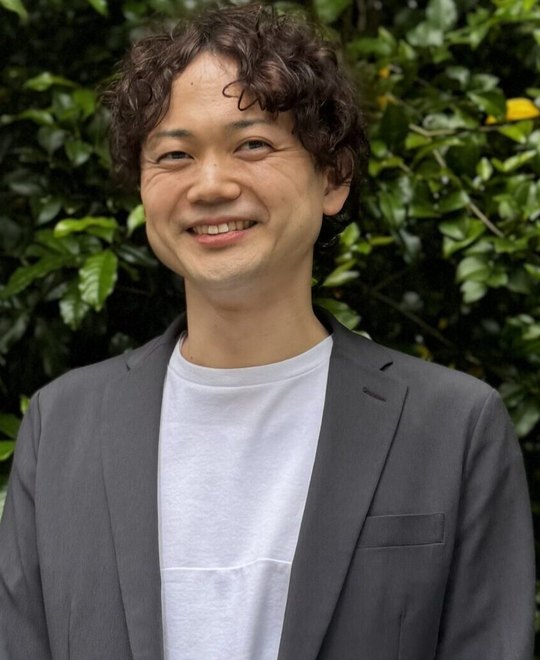
Taishi Sawada is a licensed Japanese tax accountant (zeirishi) practicing in Osaka. He passed the Japanese CPA examination and is an associate member of the Japanese Institute of Certified Public Accountants, and is a graduate of Kyoto University in economics. His office files several hundred Japanese tax returns a year on a fully remote, fixed-fee model — the same document-based workflow this English practice runs on, now serving clients investing in and relocating to Japan.
The tax accountant register is public. It is in Japanese, so here is how to use it: on the Japan Federation of Tax Accountants' register, enter the registration number (登録番号) 149197 and the name 澤田 大志. A listing that matches is the professional you are dealing with. If anything doesn't match, don't proceed — with anyone.
Describe your situation in a few paragraphs — where you're from, what you're planning in Japan, and your rough timeline. You'll have a reply, in plain English, within two business days.
First inquiries are free. Fees begin only after you accept a written fixed quote.